Building Bitcoin for Africans, By Africans: Lessons From 5 Years on the Ground
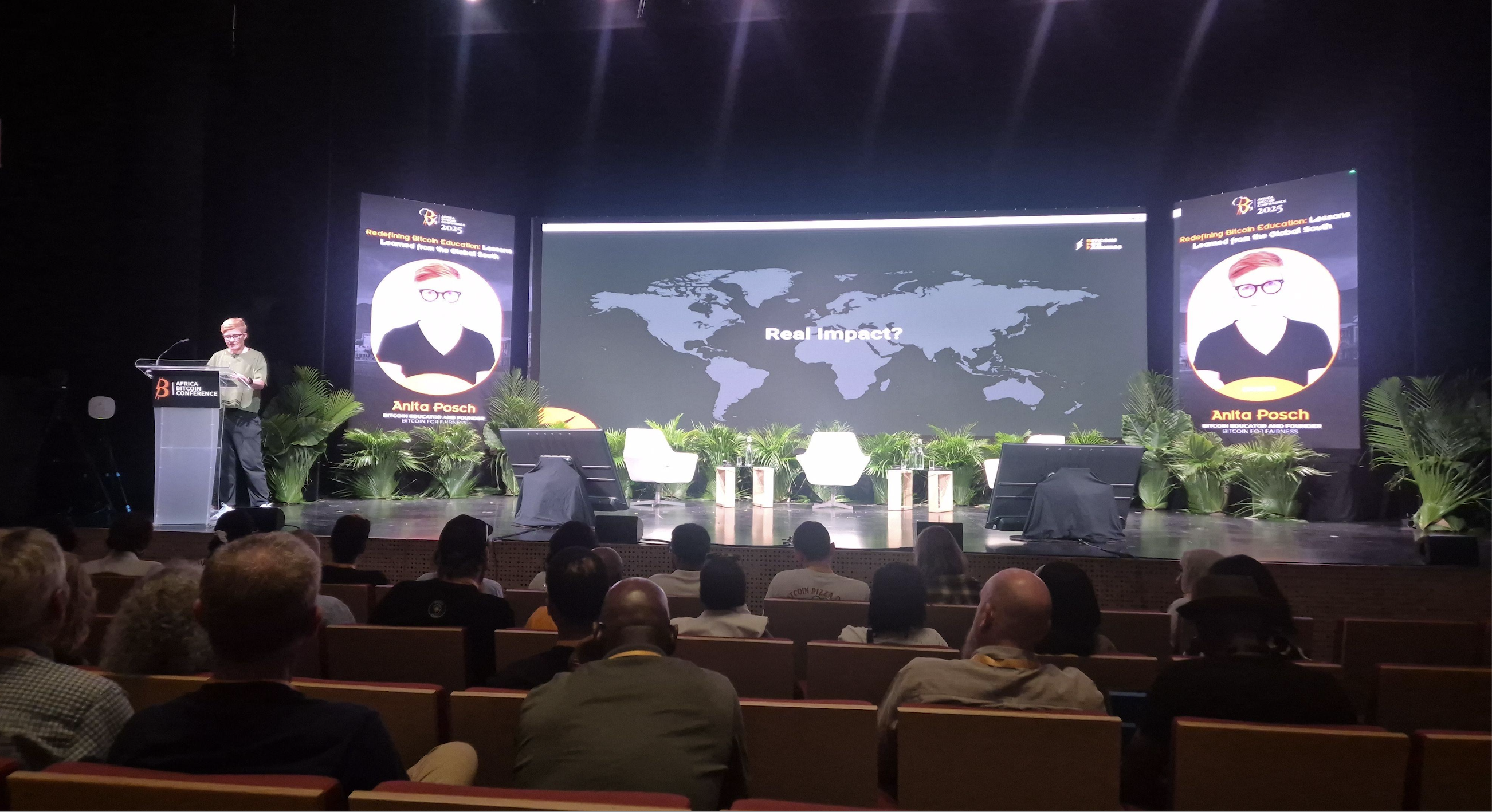
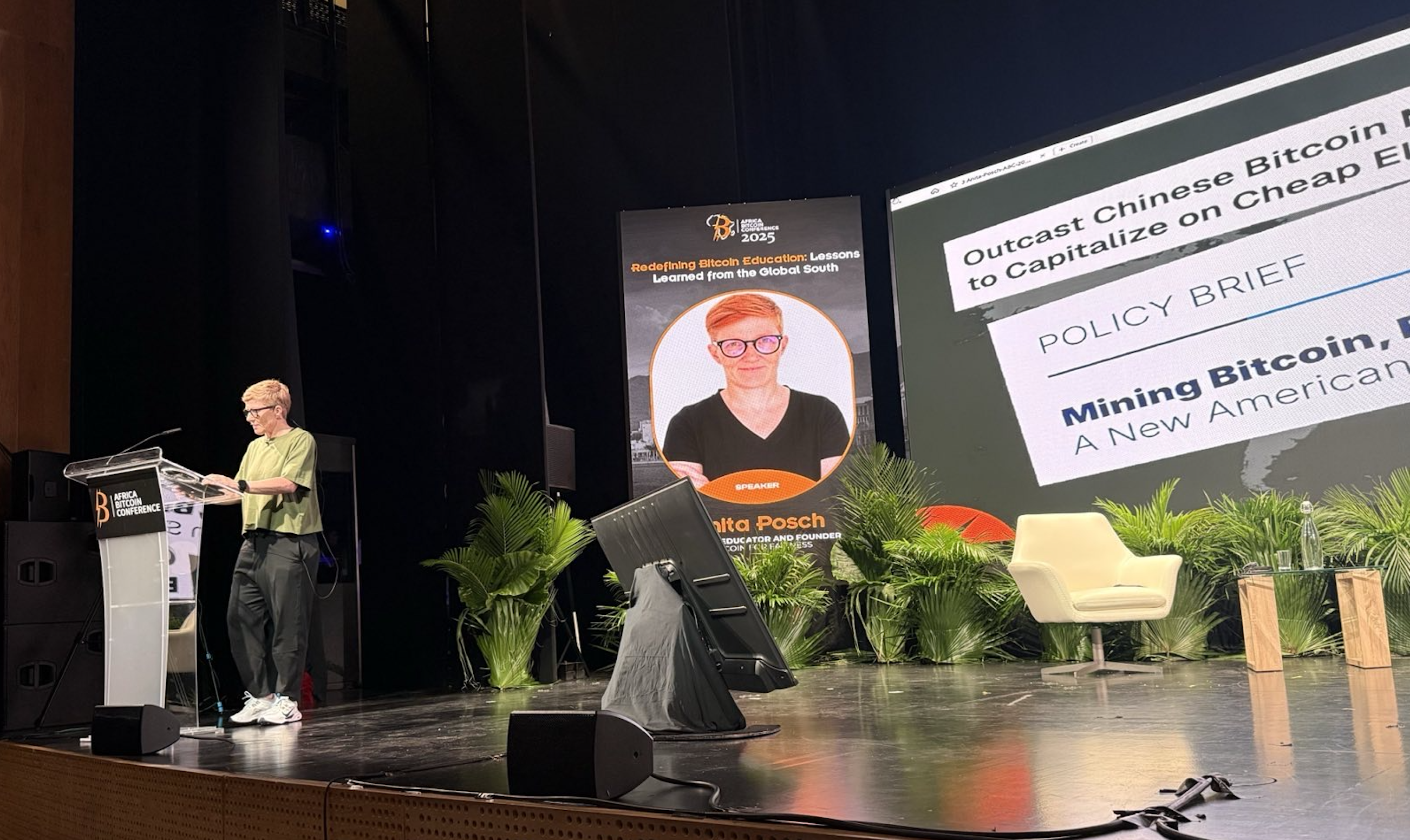
Keynote Anita at Africa Bitcoin Conference 2025
In 2020, when I visited Zimbabwe the first time I found no Bitcoin-only education initiative on the African continent. Today there are more than 150. Sounds like an incredible success story, right? When you spend time on the ground you'll discover: the impact is often minimal, if it exists at all. Decades of foreign aid money and more or less good intentioned projects have led to expectations.
In our work with Bitcoin for Fairness on the ground we learned that paying people transport money and providing lunch is necessary otherwise they wouldn't show up to our free workshops. Data is expensive, often the connectivity is bad making online learning impossible for many. It's difficult to measure the impact of general Bitcoin education. What you'll find are graduation photos, celebrations, videos of onboarded merchants, copy-pasting initiatives and chasing funding.
Many projects are adoption theatre, not real adoption.
Bitcoin education is not charity. Its intention is to build the foundation for applied freedom.
To quote my friend, activist and founder of this amazing conference Farida Nabourema: "I come from Togo, a country ruled by one of the longest-standing dictatorships in Africa, where repression extends even to financial flows. People have been arrested and jailed simply for receiving money suspected of supporting political efforts. For me, sending funds back home as a highly exposed activist was never just a matter of convenience but of safety. Bitcoin gave me the ability to send money privately and securely without exposing those I care about to such risks."
I myself have spent most of the last five years working on the ground in different African countries, with a strong focus on the Sub-Saharan region, I spent 1,5 years in Zimbabwe. I have the freedom to leave whenever I please.
17 million Zimbabweans are trapped in hyperinflation. Over and over again. They have seen 6 different currencies since independence in nineteen-eighty. Today they are doing what is best: they simply refuse to use the newest local currency called Zimbabwe Gold.
Last year I saw exactly one ZiG banknote while it was handed around, because no one ever had seen one. Zimbabwe is the poster child of how the fiat system can be corrupted to cater to those who are in the line to eat. It shows how money that is based on issuance of debt serves the powerful, not the people.
That is why Bitcoin matters.
Bitcoin is the only true alternative to this system of repression and control.
Make no mistake, in the near future there will be no other financial technology as revolutionary as Bitcoin. Developing a global permissionless digital money that empowers individuals and the civil society challenging the world's most powerful institutions and insiders was possible 17 years ago, today it would not go unnoticed. We have one shot at this.
Utility and Privacy First
Activists like Farida Nabourema, donors to freedom movements and campaigns protecting democratic change have to stay safe while using Bitcoin. We need to build tools that are protecting privacy and are decentralized so that they can be downloaded independently from Google Play or Apple stores and have low-fees. These foundational principles should be integrated in everything that we build, then anyone is safe.
We need to add Bitcoin rails into existing applications that are used by millions.
Some great examples are:
- Tando, with which you can pay anyone in Kenya with bitcoin
- Machankura, where you can use bitcoin within WhatsApp or if you own a feature phone you can send and receive bitcoin even without internet
- MoneyBadger enabled a solutions with which you can pay with bitcoin in thousands of stores all over South Africa.
These applications are centralized at the moment and will need to find a path to decentralization but they are solutions to real problems built by locals.
Within the adoption theatre a lot of initiatives have done remarkable work:
- Bitcoin Dada - the pioneer in bringing bitcoin to females
- Bitcoin Ekasi - the first circular economy in Africa
- Bitcoin Zambia,
- Bitcoin Reach and Yebo Bitcoin in Zimbabwe or
- Bitcoin Famba in Mozambique
just to name a few.
After 5 years of our Bitcoin for Fairness work and 2 years of scholarships for African educators and community builders in our Crack the Orange program we see members of initiatives from South Africa, Malawi, Kenya, Ghana, Zambia and Zimbabwe supporting each other, sharing knowledge and opportunities in our borderless scholars group. It takes years of dedicated work to see the impact.
Because of the ground work and because of the fact that more and more people are realizing that Bitcoin is their last resort, the tool that helps them overcome real obstacles, the use has been rising. In 2024 the cryptocurrency volume handled in the Sub-Saharan area has shot up making it the third fastest growing region in the world, just behind the Asia-Pacific region and Latin America.
Bitcoin is inevitable. But we need to stay vigilant.
Colonialism has reemerged as debt-based imperialism. Now it's showing it's grim face in capturing African bitcoin for foreign interests.
Bitcoin mining in Africa is mainly in the hands of China, US American strategists are planning to capture Africas energy sources to produce American bitcoin, leaving behind crumbs, their bad performing USD.
When the Bitcoin network gets sucked up and regulated by the state backed corporate-industrial complex it loses it's teeth. It's just another tamed tiger in the hands of the few.
Too many Bitcoiners simply repeat what they read on social media, focusing on institutional adoption, Western investment narratives and “number go up” messaging.
You can't meme yourself into financial freedom! It's time to ask yourself what can you do for Bitcoin - not what can Bitcoin do for you?
Request being paid in bitcoin, spend it in your community, develop solutions with the focus on privacy, self-custody and censorship resistance.
Don't let foreign investors extract wealth from your countries like they have done for centuries. They come dressed as forces of good, promising growth. But they only enrich the few while trapping everyone else in debt - all they care about is their own profit and that of their local enablers.
Think long-term, run nodes, mine to your own advantage, build for your fellow Africans and the world.
What does it take to unleash Bitcoin's revolutionary potential?
1. Distinguish Adoption Theatre from Real Adoption
Real adoption is earning, spending and saving bitcoin.
2. Build Local Solutions for Local Problems
Stop copy-pasting foreign models, the solutions that work on the ground can only be built by locals. If foreigners benefit more than your community, it's extraction, not development.
3. Privacy, Self-Custody, and Censorship Resistance Are Non-Negotiable
They're what makes Bitcoin unique in its potential to give back power to the people.
4. Real Impact Takes Years - Resist Short-Term Thinking
Sustainable change doesn't happen in one workshop or conference.
5. We Have One Shot - Defend Bitcoin or Watch It Get Captured
The fight is to preserve Bitcoin's permissionless, uncensorable nature against state capture, corporate control, and neo-colonial extraction. Ask "what can I do for Bitcoin?" and resist letting Bitcoin become just another tool in the hands of the powerful.